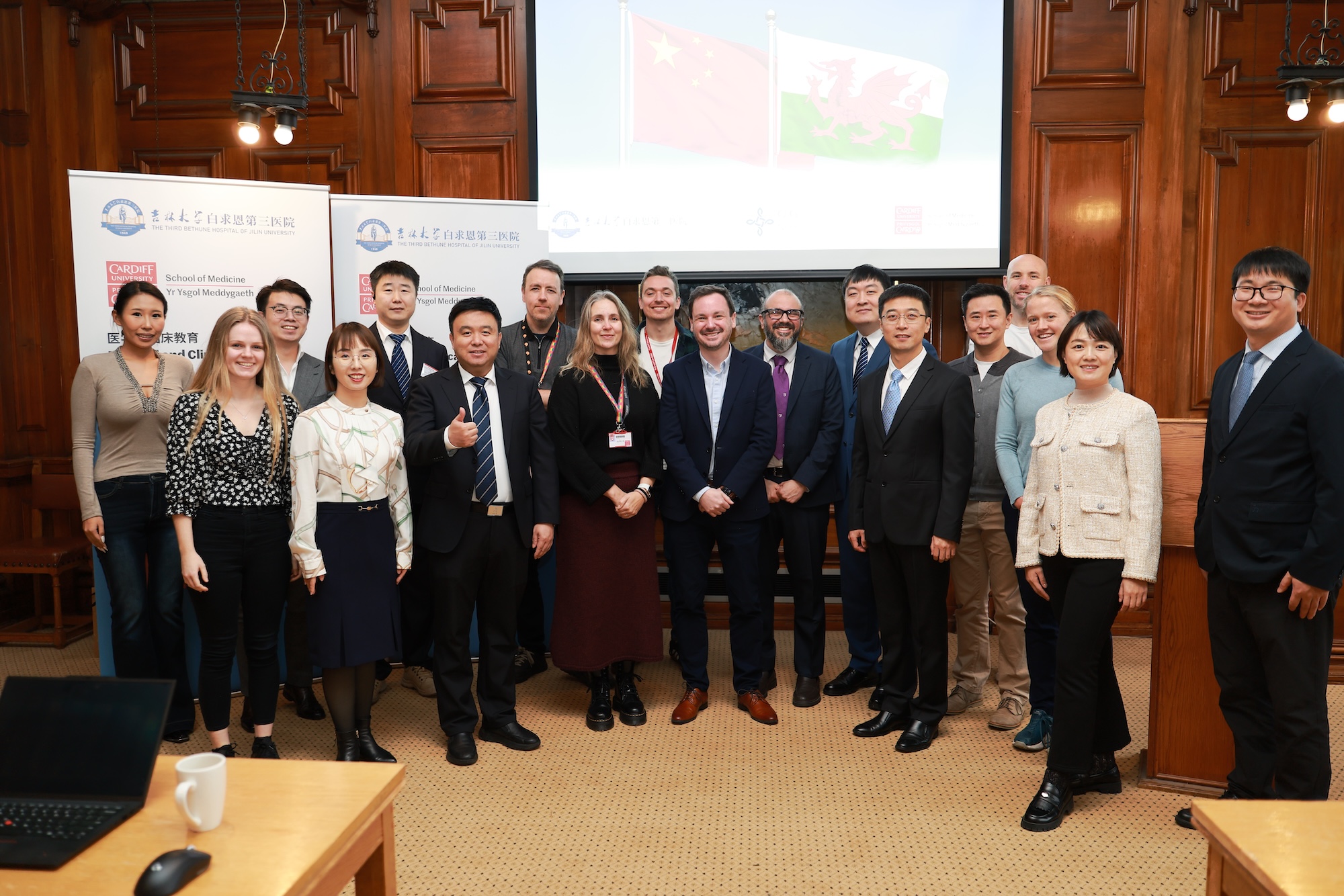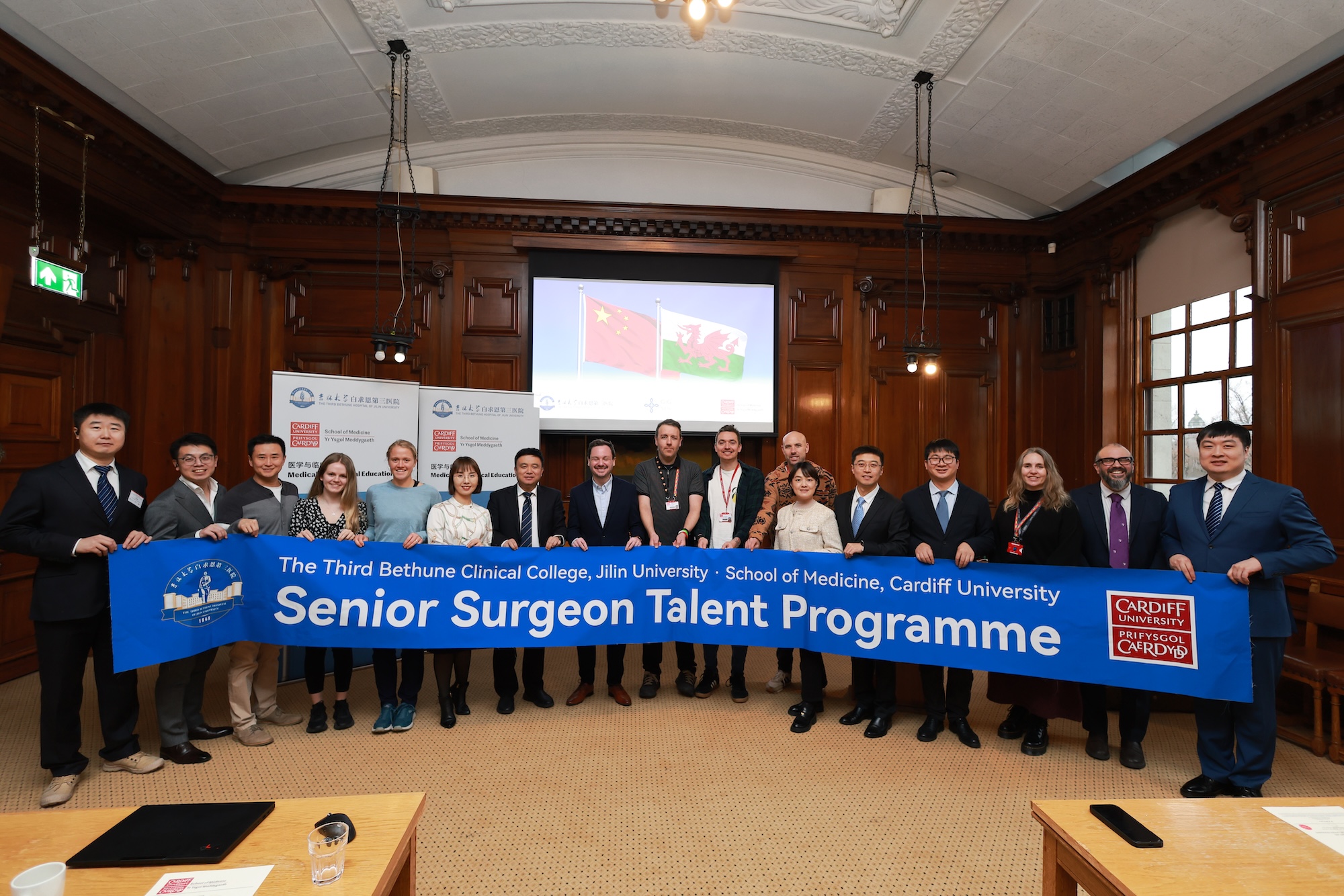
It was a great honour to be involved in a high-profile international collaboration over the past two weeks. This initiative represents an important transnational education (TNE) connection with the backing of the BLS College, PVC Steve Riley, and the International Office. I had the opportunity to work alongside my Digital Education colleagues – Owen, Jordan, Andrew, and Lewis – to support the creation of a brand new CPD course in collaboration with the School of Medicine and a distinguished group of delegates from The Third Bethune Hospital of Jilin University.
This collaboration serves multiple purposes beyond simply creating content. It’s an opportunity to demonstrate our capacity to produce courses collaboratively and efficiently, with the intention of applying similar processes to future international partnerships. The courses we develop will be franchised back to Jilin University and potentially other partner institutions, helping to establish Cardiff’s reputation for responsive, high-quality collaborative course development in the medical education space.
What we did
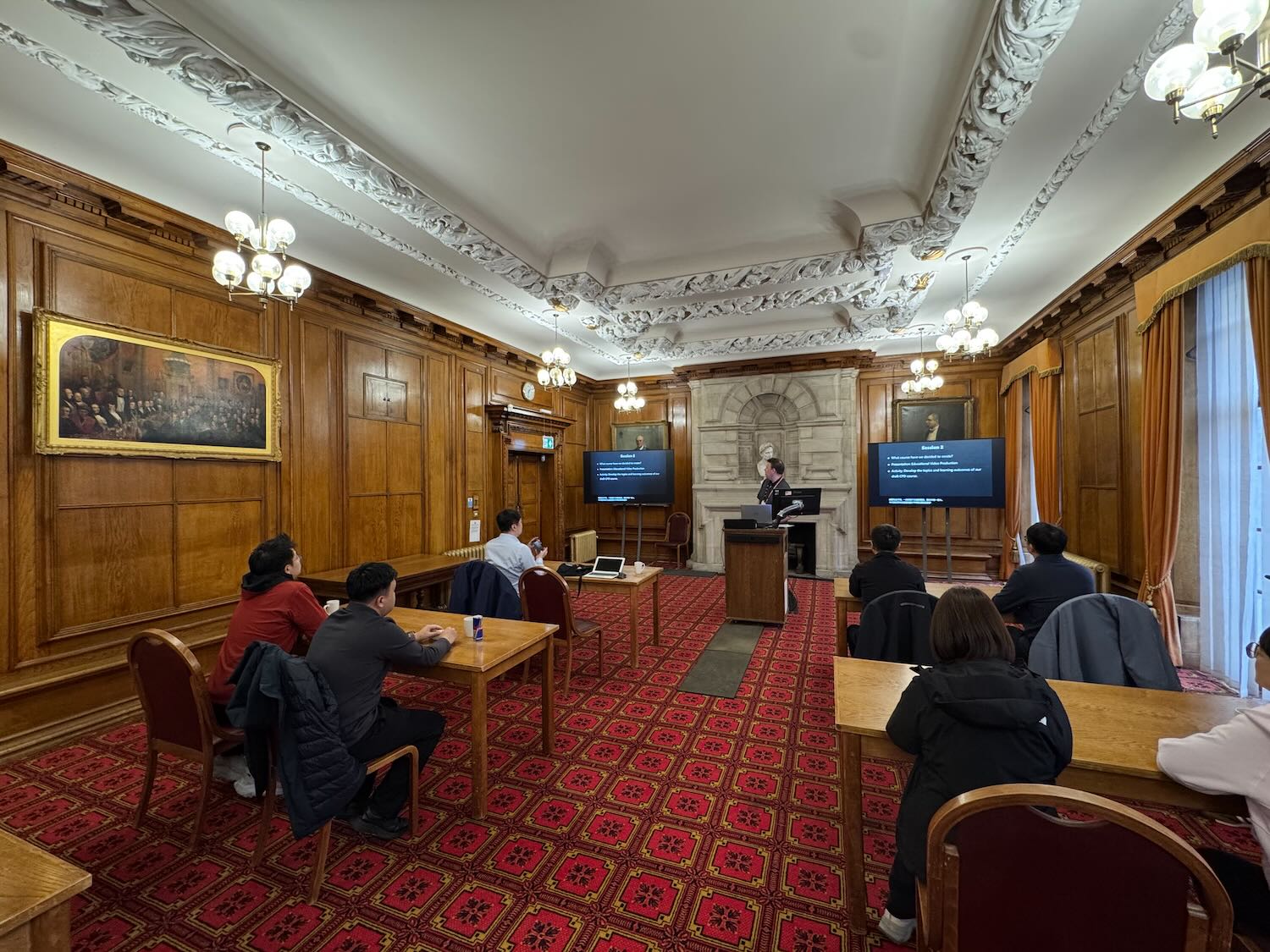
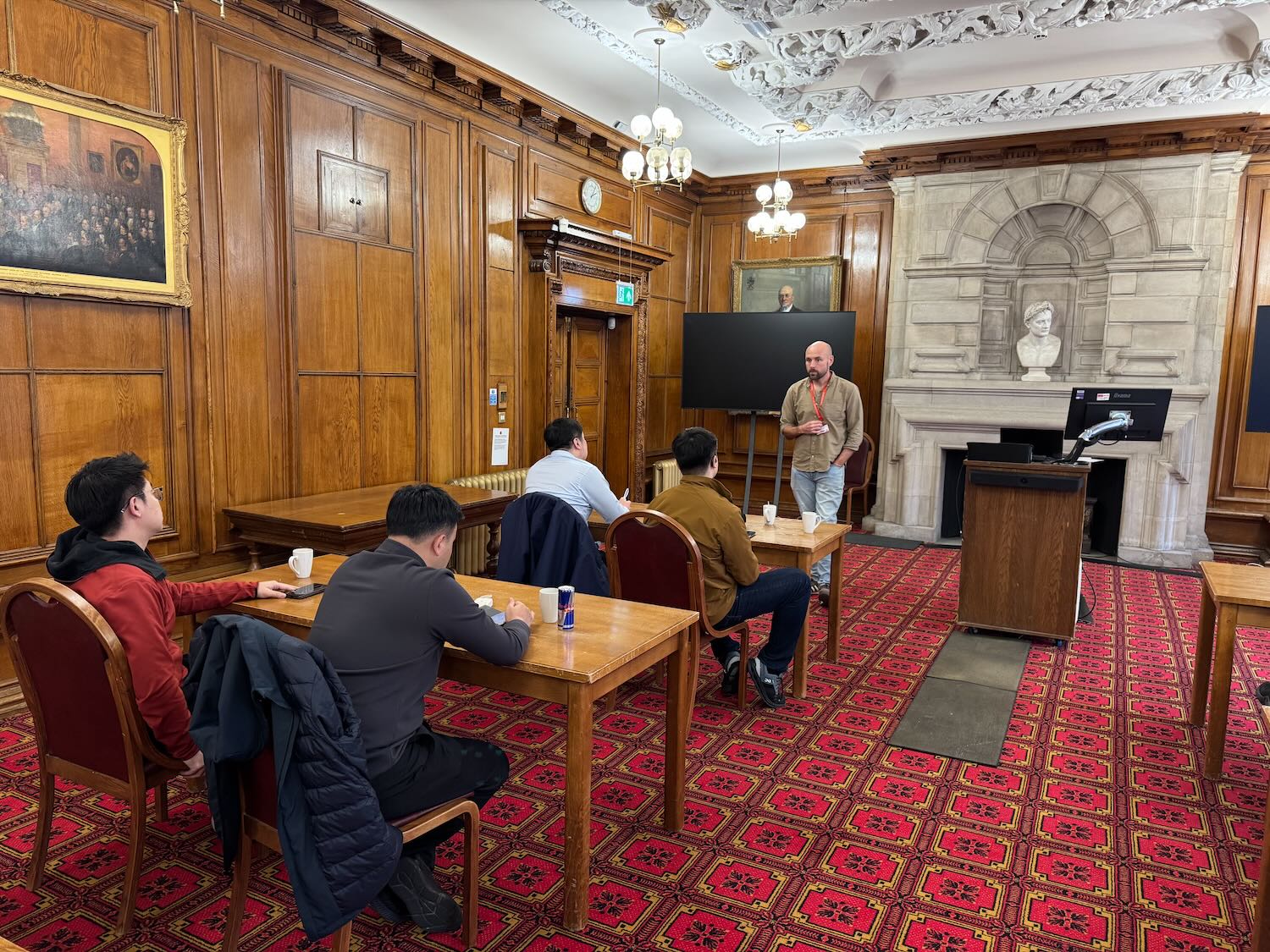
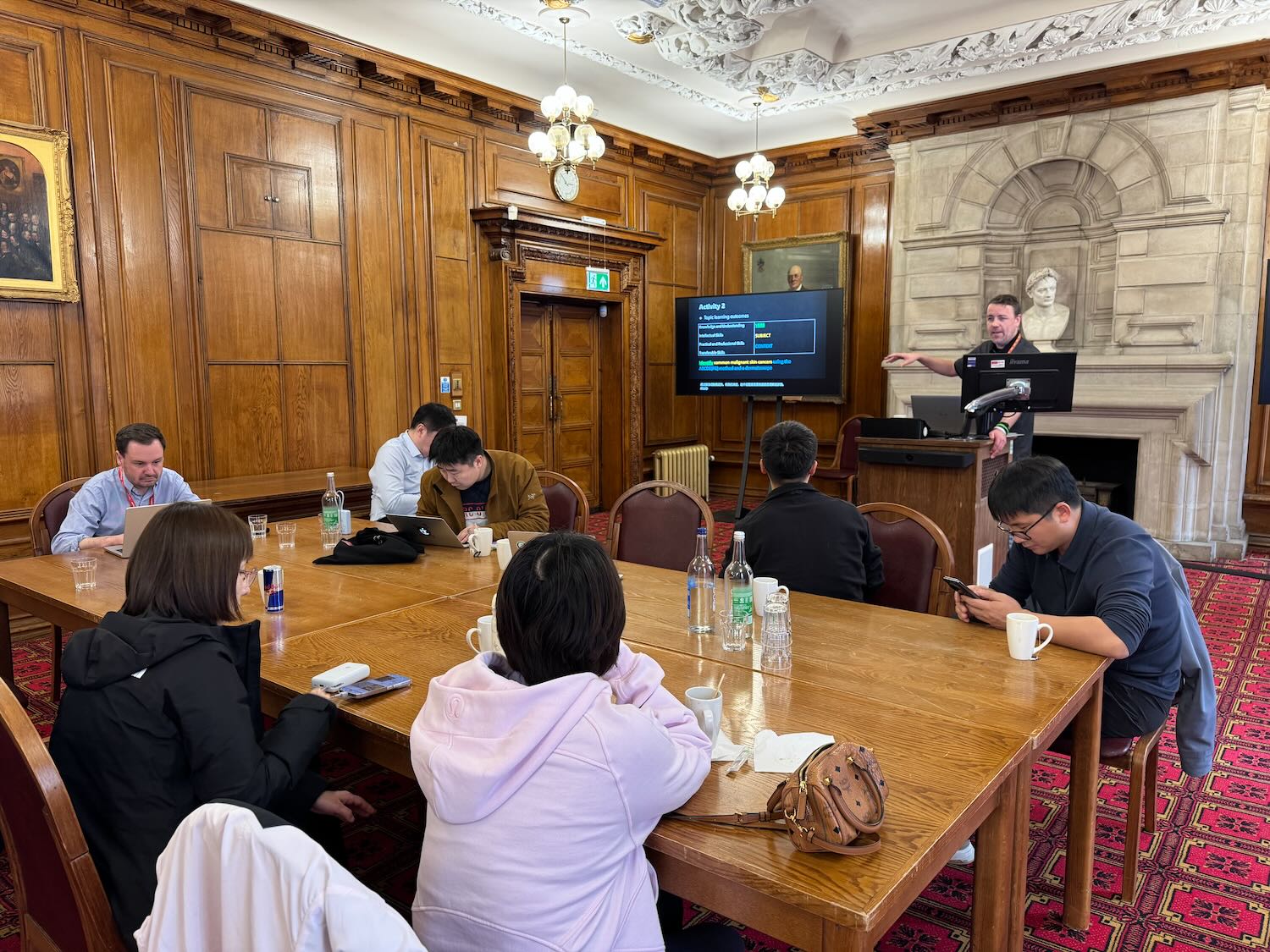
We successfully delivered four workshops over four afternoons, working intensively with eight visiting delegates alongside clinical colleagues from Cardiff and translators to support the sessions.
Session One: Foundations and Course Mapping
We began by introducing the delegates to the LTA and our Digital Education team, focusing particularly on our course development processes. They were genuinely impressed with the range of engaging content we’ve created using different technologies. We then introduced the ABC curriculum design methodology – an approach we use for course mapping that provides a visual, collaborative way to plan learning activities.
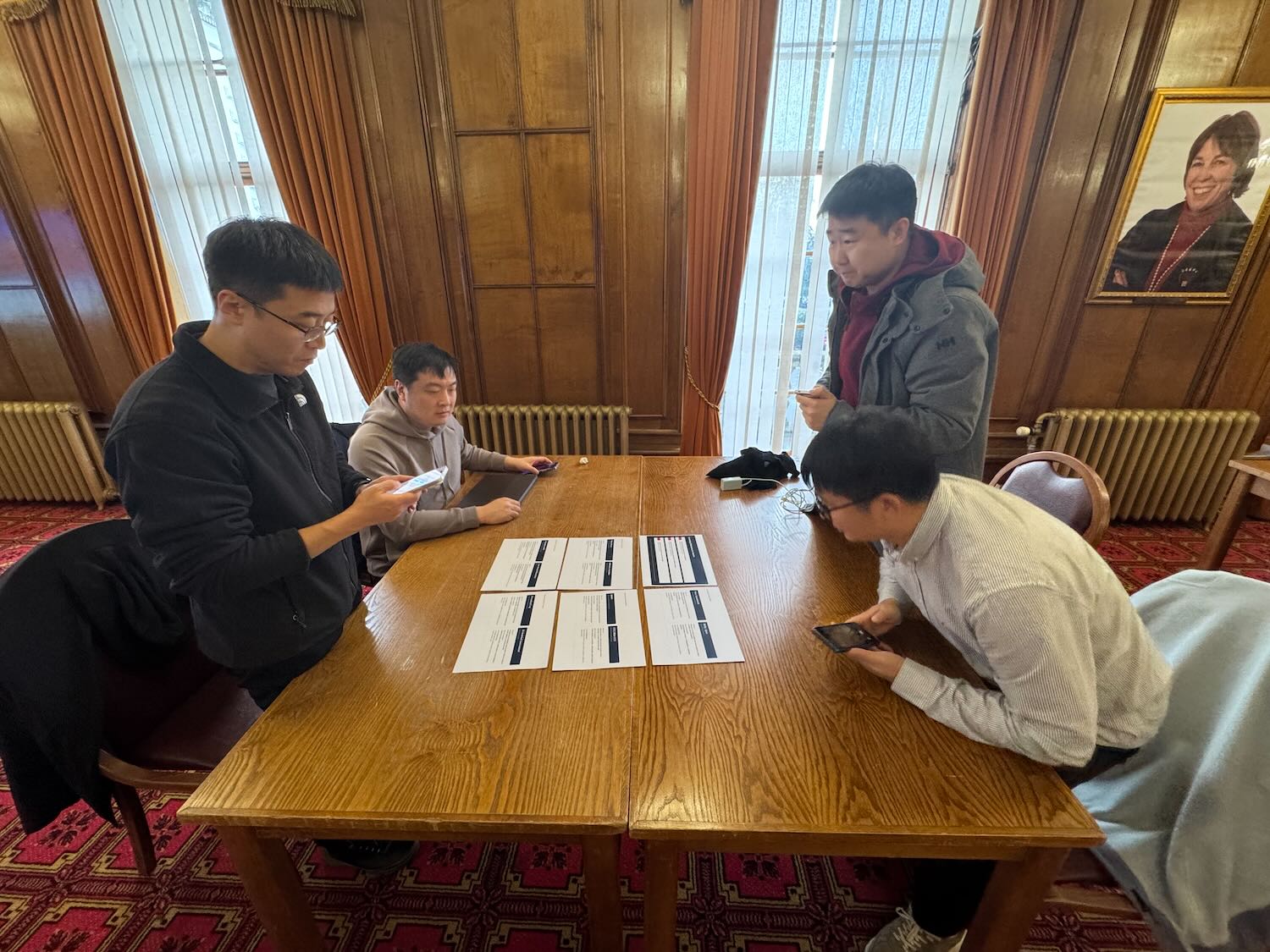
For the practical activity, we divided the delegates into two groups and asked them to use the ABC cards to map out an existing CPD course. This hands-on exercise allowed them to apply the methodology immediately. By the end of the session, the delegates had identified a topic for their course: biopsy procedures – an area where they recognised both expertise within their team and a clear need within their hospital context.
Sessions Two to Four: Building the Course
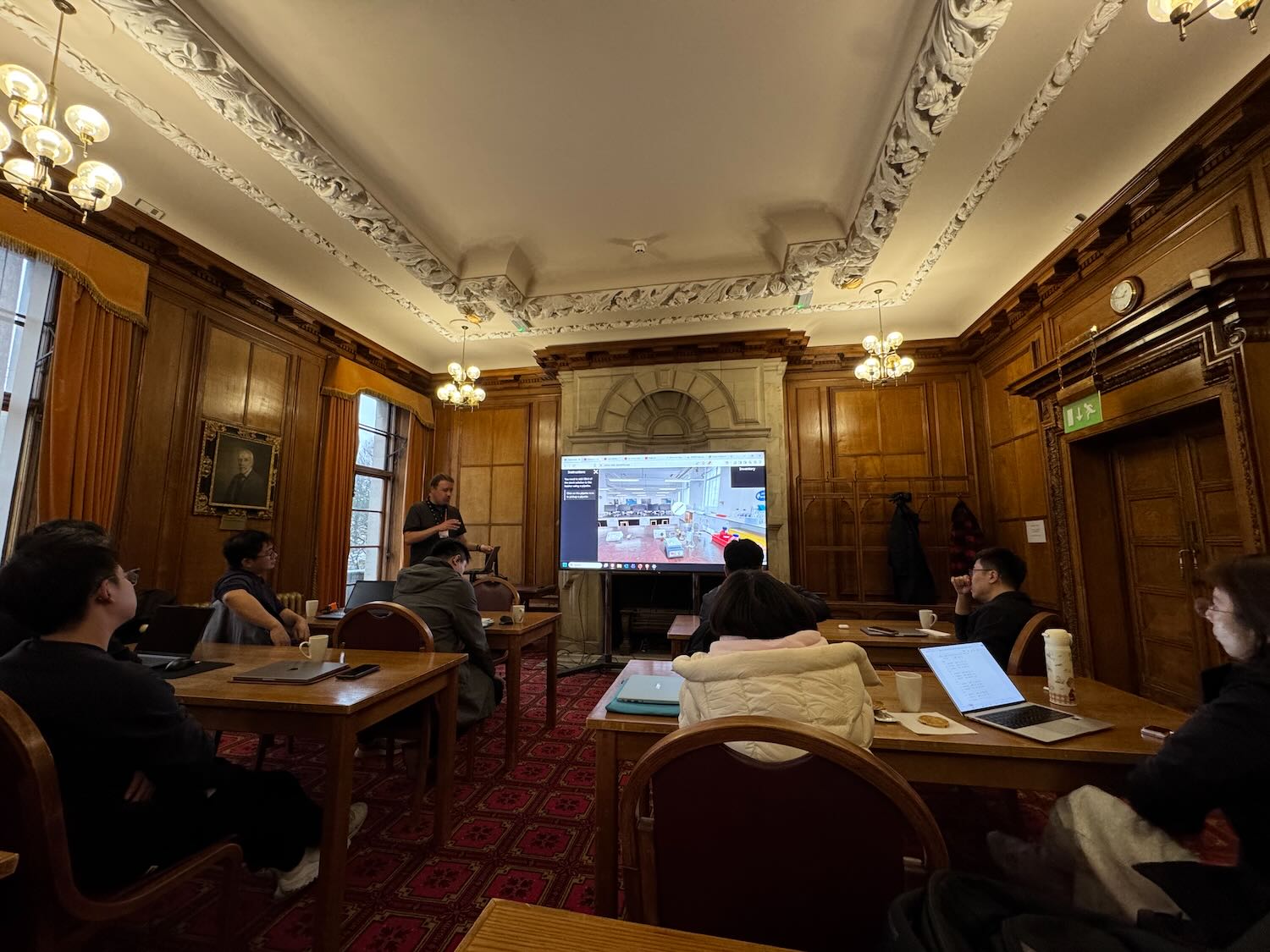
Over the subsequent sessions, we showcased a range of high-quality video resources we’ve produced for medical education, including 360-degree videos and immersive learning using 360-degree images. The delegates were particularly engaged with these examples of technology-enhanced learning.
We then guided them through developing learning objectives for their chosen topic. This is where my dual expertise in digital education and Chinese language became particularly valuable. Whilst all delegates were experts in their respective fields, they specialised in different areas within medicine. Additionally, although the group had a good level of English, when discussions moved into detailed medical topics, they naturally shifted to communicating in Chinese. I was able to bridge this gap, helping to facilitate group discussions, clarify pedagogical concepts, and ensure that the workshop objectives remained on track whilst allowing the delegates to express complex medical ideas in their preferred language.
As we progressed, we introduced storyboarding techniques and provided templates for the delegates to begin mapping out their course content. We also explored the Universal Design for Learning (UDL) framework. This sparked interesting conversations, as we discovered that whilst UDL is widely discussed in the UK, it’s not as prominently featured in Chinese educational discourse. In China, inclusive education is certainly growing, but the conversation tends to focus more on special education policy rather than universal design principles.
The Final Session: Assessment and Cross-Cultural Exchange
For the final session, I designed two engaging activities that brought together assessment design and cross-cultural learning:
Assessment Method Matching: I created a hands-on activity where delegates worked to match appropriate assessment methods to the biopsy course learning outcomes they’d developed. The task then extended to identifying potential barriers students might face with each assessment type, and proposing UDL-aligned adaptations to make them more inclusive. To support this activity, I developed assessment method cards and learning outcome reference cards that made the complex task of assessment design more tangible and collaborative.
Cross-Cultural Practice Exchange: This activity invited delegates to share assessment practices from their own institutions, exploring differences and similarities between UK and Chinese approaches. The goal was mutual learning – recognising that both contexts have valuable practices to offer. This discussion revealed fascinating insights into how assessment is conceptualised and implemented in different educational cultures, and generated ideas that delegates were keen to take back to their institutions.
By the end of our four sessions, we had completed storyboards and created an outline course structure on Learning Central. The delegates were extremely impressed with the speed at which we managed to put a course together collaboratively.
The challenges
Working across cultures and disciplines presented some fascinating challenges. Beyond the language considerations, we discovered that many of the delegates weren’t regularly involved in teaching – perhaps only one or two had significant teaching responsibilities. This meant we needed to scaffold not just the content creation process, but also some fundamental pedagogical concepts.
Another insight came from discussions about support structures. The delegates were intrigued to learn about our role and the existence of a dedicated team bridging technology and pedagogy. They explained that whilst they have departments providing essential technical support in China, there isn’t really an equivalent to our team – a group of specialists who can integrate educational theory, curriculum design, and technology in a holistic way. This represented both a challenge in explaining our approach and an opportunity to demonstrate its value.
Reflections and looking forward
This collaboration has been a significant learning experience for me personally. Being able to draw on both my expertise in digital education and learning design, alongside my Chinese language skills, allowed me to make meaningful contributions throughout the workshops – not just in facilitating activities, but in genuinely bridging cultural and linguistic gaps that could have been barriers to productive collaboration.
Throughout the workshops, the delegates expressed strong interest in how the medical education system works in the UK compared to China. The journey to becoming a doctor, for instance, follows quite different pathways in each country, and there was genuine curiosity about how CPD and continuing professional development is structured and delivered here.
Perhaps most significantly, we’ve identified a real opportunity to bridge a gap. The absence of dedicated learning design and educational technology teams in many Chinese institutions means there’s considerable potential for knowledge exchange and collaborative course development. The delegates were keen to explore peer-to-peer exchanges with UK specialists who share their clinical specialties, combining clinical expertise with pedagogical innovation.
This initial project has laid strong foundations – not just in terms of the biopsy course we’ve created together, but in demonstrating a model of international collaboration that values both clinical expertise and educational design. The experience has reinforced for me the value of bringing together diverse skills and perspectives, and I’m excited to see where these connections lead.
Workshop Gallery